Complete Maritime Profile & Reviews of Sm-Eagle
IMO: 9761827
Lng Tanker, Panama
Photos
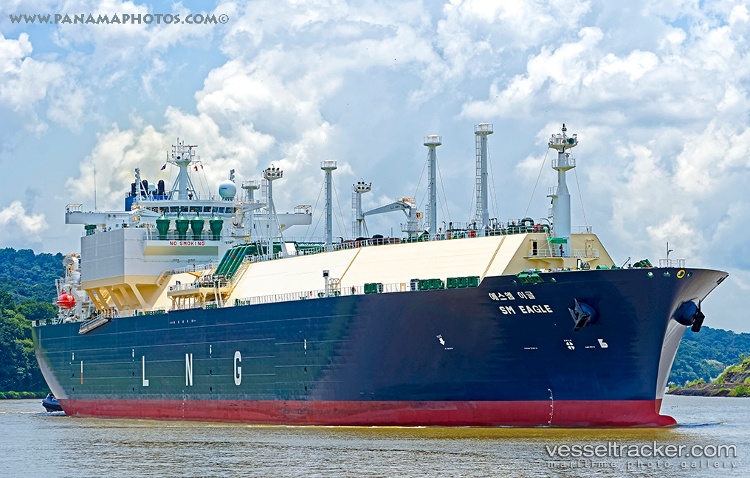
Vessel Details
MMSI
370895000
Callsign
3EMX3
Width
46.0 m
Length
295.0 m
Reviews (1)
Douglas
2025-06-19
Position: Wiper
Advantages:
Looking for information about this vessel. Any thoughts on this vessel? Was the pay decent?
Disadvantages:
No personal experience yet, just gathering info.
Latest News (1)
KOGAS set to Receive Inaugural LNG Shipment from Cheniere in July
Korea Gas Corporation (KOGAS) is poised to welcome its inaugural liquefied natural gas (LNG) cargo from Cheniere Energy in July, marking the commencement of a significant 20-year supply contract. According to two insiders at KOGAS, the 74,000-tonne LNG shipment is being transported from Cheniere's Sabine Pass export terminal located in Louisiana and is scheduled to dock at the port of Tongyeong, South Korea, on July 2. The long-anticipated 20-year agreement entails KOGAS receiving 2.8 million tonnes of LNG annually from Cheniere. Initially expected to kick off this year, the precise start date had remained uncertain within market circles. With this new supply contract in place, it is projected that KOGAS may lessen its reliance on spot LNG purchases, potentially impacting demand in the Asian market, as noted by an LNG trader based in Singapore. As the second-largest LNG importer globally, South Korea predominantly sources its LNG through KOGAS, importing approximately 30 million tonnes annually, with Qatar being its main supplier. The vessel responsible for transporting this first consignment, the SM EAGLE, has been navigating the Pacific Ocean after successfully transiting the Panama Canal and departing on June 2, as confirmed by shipping data from Thomson Reuters Eikon. Earlier this year, in January, SK E&S, another South Korean gas and power enterprise, made headlines by receiving the nation's first spot cargo of shale gas from the Sabine Pass LNG terminal. In the first five months of 2023, South Korea's LNG imports reached nearly 16.2 million tonnes, reflecting a year-over-year increase of 14.2% compared to the same timeframe in 2016, with U.S. supplies accounting for 298,066 tonnes of that total.
Write Your Review
Similar Vessels You Might Be Interested In