Chikyu
IMO: 9234044
Drilling Ship, Japan
Photos
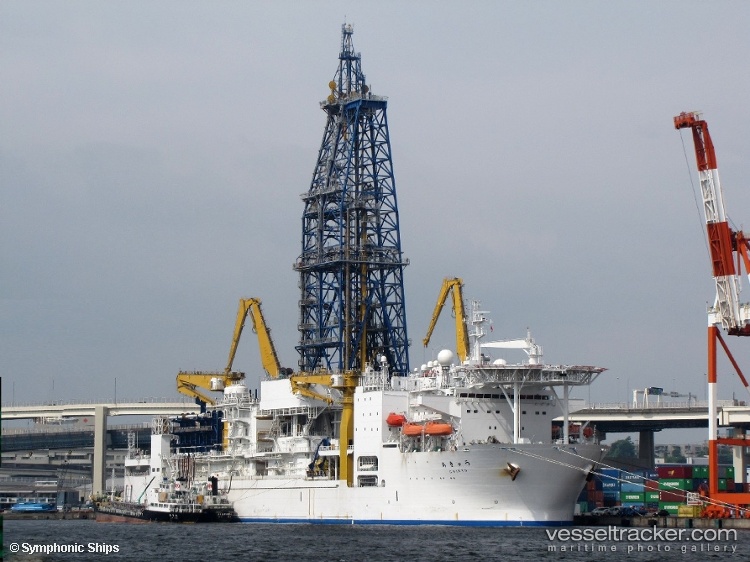
Vessel Details
MMSI
432522000
Callsign
JRAJ
Width
38.0 m
Length
210.0 m
Reviews (1)
Bobby
2024-02-27
Position: Chief Officer
Advantages:
Looking for information about this vessel. Has anyone worked on this vessel? How was the atmosphere onboard?
Disadvantages:
No personal experience yet, just gathering info.
Latest News (3)
Drill ship failed to reach the earthquake-generating zone
The "Chikyu," failed to achieve its goal of penetrating 5,200 metres beneath the sea floor into the realm where two tectonic plates meet and cause enormous earthquakes. The Nankai drilling project was described on May 28 in Chiba, at a meeting of the Japan Geosciences Union. Engineers gave up on that long-sought target in February, after the drill hole kept collapsing, just over 3,250 metres beneath the sea floor. Now researchers were trying to work out what went wrong. Next month, the board that oversees "Chikyu"’s operations will meet in Kobe to discuss the failed drilling attempt. The Japan Agency for Marine-Earth Science and Technology, which includes MarE3, is also convening an independent review panel. The plate boundary is so deep that Chikyu is the only scientific ocean-drilling vessel capable of reaching it. The ship uses a structure known as a riser, similar to the technology used on an oil rig, to stabilize its drilling equipment and penetrate the water, the sea floor and beyond. In October 2018, the "Chikyu" made its fourth trip to a site on the Nankai Trough known as C0002, where it had already drilled the deepest-ever hole beneath the sea floor. Engineers knew that the next phase of drilling would be tricky, because the hole penetrates rocks that are fractured and folded. The rocks shatter vertically, along the same path that the drill is trying to take. The MarE3 team was able to deepen the hole from just over 2,900 metres beneath the sea floor to 3,262 metres, breaking its own record for the deepest scientific ocean drilling. But the researchers couldn’t go any farther. Although engineers lined the hole with steel as they drilled, it kept collapsing at the bottom. The team eventually backed up a few hundred metres and started drilling a new branch off to the side of the main hole. The technique, known as sidetracking, is used in oil and gas exploration but is not common in scientific ocean drilling. That hole also kept collapsing, and the engineers tried to establish more sidetracks. None worked. Eventually, the team had to cut the drilling pipe and withdraw for good. The mud circulating within and around the deep drilling equipment might have been heavier than expected, or tiny cracks in the rock might have destabilized the hole. The MarE3 team had tried to adjust its drilling procedures to prepare for the extra weight of heavy mud, and had reinforced the rock face with fibre. After the C0002 hole failed, the "Chikyu" moved on to drill without its riser in shallower holes nearby. Its other scientific accomplishments over the years included exploring how much heat life can withstand in sediments beneath the sea floor, and the geology of the shallow fault that unleashed the devastating 2011 Tohoku earthquake1. The ship also investigated the many small, slow-motion earthquakes that strike the Nankai Trough. The "Chikyu"’s future schedule is yet to be decided, although many were not giving up on reaching the 5,200-metre goal. The lessons learned from the C0002 drilling will help to advance deep-sea drilling techniques. Once the various project reviews are over, the "Chikyu" team will decide whether to ask for more money from the Japanese government to try again. The latest expedition cost around US$55 million to operate. In any case the "Chikyu" would need to start a fresh hole. C0002 is destroyed beyond repair.
Japanese Vessel Chikyu Bores Hole 7,000 Feet Below Seafloor and Sets Record
A Japanese drilling vessel has set a record by drilling more than 6,926 feet (2,111 meters) beneath the seafloor, deeper than ever before, the Japan Agency for Marine-Earth Science and Technology, the organization behind the expedition, announced on Sept. 6, 2012. The drilling was done off Shimokita Peninsula of Japan as part of an expedition that began in July and is scheduled to continue for three more weeks.
Deep sea vessel CHIKYU to probe quake's focal region off Miyagi
Drilling at a seabed fault is set to start off Miyagi Prefecture in the focal region of the Great East Japan Earthquake to clarify what triggered the March 11 tsunami. As of Monday, the Chikyu, a 56,700-ton deep-sea research vessel owned by the Japan Agency for Marine-Earth Science and Technology, lowered its drill pipe to a depth of about 5,000 meters in waters 6,910 meters deep, the agency said. The Chikyu will drill two holes 1,000 meters under the seabed to install thermometers. It will then analyze how the faults slid against each other, which is believed to be the cause behind the devastating tsunami, based on residual frictional heat from the earthquake in the rocks.
Frequently Asked Questions
🌊 Did Chikyu sink or have any sinking incidents?
Based on available news reports, Chikyu has been mentioned in connection with sinking-related incidents. There have been 2 news reports mentioning sinking incidents. For detailed information about specific incidents, please refer to the latest news section above.
⚙️ Did Chikyu have any engine problems?
Based on available news reports, Chikyu has been mentioned in connection with engine-related incidents. There have been 1 news reports mentioning engine problems. For detailed information about specific incidents, please refer to the latest news section above.
🛢️ Did Chikyu have any oil spills or pollution incidents?
Based on available news reports, Chikyu has been mentioned in connection with spill-related incidents. There have been 1 news reports mentioning spills. For detailed information about specific incidents, please refer to the latest news section above.