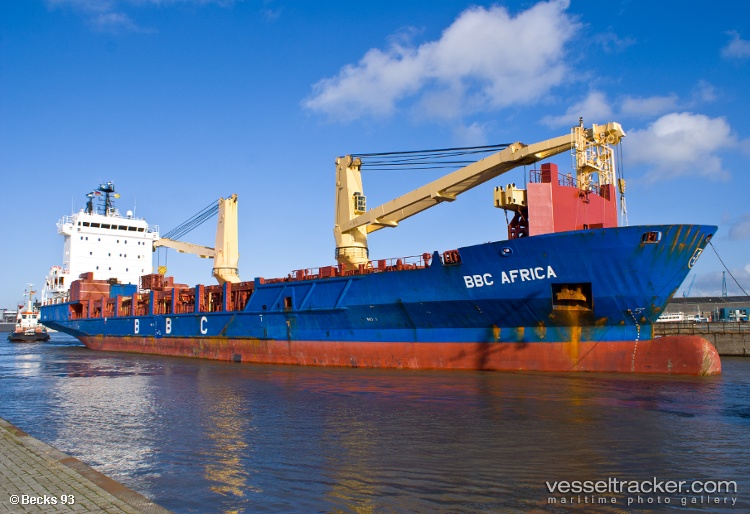
Bbc-Africa
IMO: 9362621
Multi Purpose Carrier, Antigua and Barbuda
Photos
Vessel Details
MMSI
304881000
Callsign
V2BO7
Width
20.0 m
Length
120.0 m
Reviews (1)
Walter
2024-03-02
Position: Storekeeper
Advantages:
Looking for information about this vessel. Looking for info about this vessel? Would sail again?
Disadvantages:
No personal experience yet, just gathering info.
Latest News (1)
NTSB report into allision with bulk carrier published
The National Transportation Safety Board concluded in an investigation into an allision in the Houston Ship Channel on Aug 25, 2023. The 'BBC Africa' was departing Houston, Texas, on that day, when the vessel suddenly lost steering control and veered off course, striking the docked bulk carrier 'Common Faith' (IMO: 9610092), which was berthed at the Anderson Grain Terminal in Houston. The post ballast tank of the vessel was punctured, along with damage to the shell plating, which cost a total of $467,000 to repair. The 'BBC Africa' suffered damage to its bulbous bow, hull, and shell plating and forward bulwarks, costing $700,000 to repair. There were no injuries or pollution reported from the incident. The NTSB reconstructed the events using AIS data and crew interviews. The 'BBC Africa'’s VDR was not functioning, but the vessel had permission to sail while repairs were being arranged. On the morning of Aug 25, pre-departure testing of the system on the 'BBC Africa' showed no problems. The 2nd officer tested the steering gear, checked rudder movements, and ran the steering gear pumps, while engineers also completed a pre-departure checklist. The master also tested steering from the port bridge wing and told the pilot aboard that everything was “in good working order.” About 10 minutes after having gotten underway, the ship was making speeds up to 6.8 knots, and everything was going smoothly. The pilot released the escort tug, and the pilot and master ordered that maneuvering control (bow thruster, main propulsion engine control, and steering) be transferred from the port bridge wing to the main control station on the bridge. The chief officer pressed the button to activate the controls on the bridge. The pilot then gave a command for starboard 10, and the helmsman confirmed adjusting the rudder. Sensing the vessel was not turning at the expected rate, the pilot ordered starboard 20 and then hard to starboard. It was then that the chief officer realized the indicator light on the main control station had gone off and tried pressing it several times to reengage the controls. The rudder indicator was showing a hard port position of 30 degrees. The master then switched the vessel’s steering to emergency override mode and got the rudder back to 30 degrees starboard. The pilot also ordered full astern, and the master then put the bow thruster to 100 percent starboard thrust. However, it was too late, and they hit the docked bulker. The investigators were unable to replicate the failure, but working with the system manufacturer determined that a component failure had caused the system to fail. The company’s investigation found the rubber on the joystick (tiller) had invisible cracks that let moisture into the control unit, which contributed to the loss of the electrical signal. The shipping company, on advice from the manufacturer, changed the bridge wing steering control tillers, the “in command” push buttons, and the main power supply transformer. They made the same changes on two other vessels with similar control systems. According to the report the primary cause was the equipment failure. However, they also noted a stressful situation with short reaction time due to the vessel being in the confines of the port. The NTSB noted that the crew had gone through training and regular drills, but recommended further training, saying that the delayed response from the ship’s crew to implement the emergency steering procedure from the bridge contributed to the vessel striking the docked bulker. The steering gear manufacturer also issued a safety bulletin. It highlighted incidents with systems manufactured between 2002 and 2009, noting that they had malfunctioned due to a weakness with the protective rubber and the micro switches. The bulletin said the consequence of the failing micro switches could lead to unintended rudder movement.
Frequently Asked Questions
🛠️ Did Bbc-Africa experience any breakdowns or mechanical failures?
Based on available news reports, Bbc-Africa has been mentioned in connection with breakdown-related incidents. There have been 1 news reports mentioning breakdowns. For detailed information about specific incidents, please refer to the latest news section above.
⚙️ Did Bbc-Africa have any engine problems?
Based on available news reports, Bbc-Africa has been mentioned in connection with engine-related incidents. There have been 1 news reports mentioning engine problems. For detailed information about specific incidents, please refer to the latest news section above.
💥 Was Bbc-Africa involved in any collisions?
Based on available news reports, Bbc-Africa has been mentioned in connection with collision-related incidents. There have been 1 news reports mentioning collisions. For detailed information about specific incidents, please refer to the latest news section above.
🛢️ Did Bbc-Africa have any oil spills or pollution incidents?
Based on available news reports, Bbc-Africa has been mentioned in connection with spill-related incidents. There have been 1 news reports mentioning spills. For detailed information about specific incidents, please refer to the latest news section above.