Arctic-Metagaz
IMO: 9243148
Lng Tanker, Russia
Photos
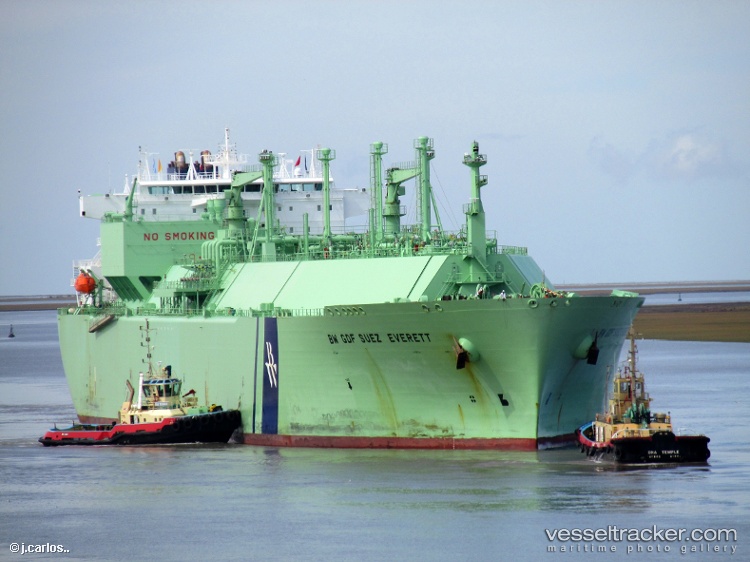
Vessel Details
MMSI
273262840
Callsign
UAFC8
Width
42.0 m
Length
277.0 m
Reviews (1)
Tyler
2024-06-14
Position: Wiper
Advantages:
Looking for information about this vessel. Has anyone worked on this vessel? How was the atmosphere onboard?
Disadvantages:
No personal experience yet, just gathering info.
Latest News (15)
Wreck drifting away from Malta
With the aalvage and towing operations for the 'Arctic Metagaz' having officially been terminated, the vessel remained adrift in the central Mediterranean on the last known Position: 33.25° N,18.77° E, approximately 93 nautical miles northwest of Benghazi. The prevailing weather systems have shifted the vessel's drift vector eastward, moving it away from the Maltese SAR boundary and deeper into the eastern Mediterranean basin. The offshore tug 'Maridive 701' remained on standby, holding station at a safe distance to track the wreck's trajectory. The active physical intervention has been suspended. Recent intelligence and parallel investigations published by RFI and Euronews have provided new assessments regarding the initial structural failure of the vessel. The primary hypothesis has shifted from a technical malfunction to a kinetic strike, indicating that the vessel was targeted by an Uncrewed Surface Vehicle (USV) operation, allegedly coordinated by Ukrainian military specialists deployed in Libya. The vessel was structurally compromised with a high probability of further degradation due to recent wave stress. The cargo of Liquefied Natural Gas (LNG) and approximately 900 tons of heavy propulsion fuel continued to pose a high-level environmental hazard to the surrounding area.
Malta continues to follow drifting tanker wreck
The Armed Forces of Malta, in cooperation with other EU agencies, continued to monitor the 'Arctic Metagaz' movements through its surveillance assets, including issuing navigational warnings to mariners and fishermen if necessary. They clarified that the case did not fall under search and rescue but constituted a salvage operation in international waters, calling any attempt to link the situation to Malta’s SAR responsibilities misleading and incorrect. The international sanctions on the vessel were, however, causing problems for a salvage operation. Libya also does not have facilities to deal with the wreck. The AFM said on April 1 that aerial photos clearly showed that tugs commissioned by the Libyan authorities were still on site, actively preventing the vessel from drifting towards the coast. The tanker had been towed to a position 105 nautical miles north-northeast of Misrata over the past couple of days. The towing attempt was officially suspended on April 2 at around 04.00 a.m. in pos. 33°50 N 16°43 W due to severe weather amid winds of 40–50 knots and waves reaching up to five meters driven by the deep low-pressure system Erminio. Weather conditions in the central Mediterranean were expected to worsen further. Winds were forecast to gust up to 46 knots and waves would be up to five meters until April 3. Reports with photos and video: https://www.maltatoday.com.mt/news/national/140715/arctic_metagaz_is_outside_maltas_sar_but_military_is_monitoring_vessel_afm_says https://maritime-executive.com/article/malta-monitoring-hulk-of-russian-lng-carrier-after-libya-towed-it-to-sea
Libya seems to have abandoned salvage operation
After officials assembled a convoy of tugs, including the offsshore tug 'Maridive 701', they began moving the 'Arctic Metagaz' on a north-northeastern course, initially in the direction of Misrata and away from sensitive offshore oil and gas infrastructure. As of late March 30, the convoy was roughly 80 to 86 nautical miles north-northeast of Misrata, firmly in international waters and edging towards the boundary of Malta’s SAR region, which begins at approximately 34 degrees north latitude. The vessel’s position near 33.75° N has prompted questions about whether responsibility for the operation could once again shift toward Malta. The route taken by the convoy appeared to contradict earlier expectations that the vessel would be brought into a Libyan port, such as Misrata, for stabilisation and possible cargo removal. Now the convoy has been moving away from Libyan ports capable of handling such an operation. The vessel’s structural instability, combined with uncertain cargo conditions, has complicated salvage planning. The International Crisis Group has described the operation as high-risk, noting the potential environmental danger posed by the tanker and the logistical difficulty of securing and offloading its contents in unstable conditions. Weather forecasts added another layer of concern. A severe central Mediterranean weather system expected from April 1 to 3 could bring winds of up to 46 knots and waves reaching five meters, conditions that could further strain towing lines and increase the risk of losing control of the vessel. After having moved the wreck some 105 nautical miles north-north east of Misrata, which has put the 'Arctic Metagaz' at the limits of Malta’s SAR. zone, Libiya seemed to have abandoned the salvage operation on April 1. The week-long towing effort may have exacerbated structural damage, potentially allowing seawater ingress into additional compartments. By moving the vessel more than 100 nautical miles offshore and back in the direction where the incident began, the Libyan authorities reduced the immediate risk to their coastline, but the larger issue of who will ultimately salvage the vessel remained. Prevailing wind directions in the coming days may push the vessel north-north east away from Libya and back into the Maltese SAR zone. Responsibility for the vessel could thus again shift to Malta. The vesseanwas situated roughly 105 nautical miles north-northeast of Misrata on April 1. Report and photos: https://gcaptain.com/libya-abandons-arctic-metagaz-salvage-at-edge-of-malta-sar-zone/ https://maltashipphotos.com/maritime-accident-lng-tanker-arctic-metagaz-update-3-until-31st-march-01-04-2026/ https://forum-schiff.de/phpBB3/viewtopic.php?p=229877#p229877
Salvage expert analysis situation of crippled tanker
According to the salvage engineer Sylvia Tervoort-ter Haar, who served as a ship's officer and engineer on chemical tankers and in 2008, and became a salvage master with SMIT Salvage, playing a leading role in more than 25 major operations, including the salvage of the "Costa Concordia", described the 'Arctic Metagaz' as an enormous safety challenge for salvors, who must first gather vast amounts of data before they can even board the vessel. She also described it as a political event due to the questions of which country may take the lead, who would bear the responsibility, and whether the ship was even insured. Salvage companies would likely hesitate to get involved until they know if and by whom they will be paid. The STS transfer of LNG during salvage operations is already extremely difficult, as the cargo must be kept at -162°C. However, the tanker's loading systems appeared to be severely damaged, making it impossible to transfer the LNG. The hull has been weakened by the large holes and was listing. Two tanks appeared to have exploded, while two more may still be intact. The LNG will evaporate because no engines are running to maintain the temperature. An odorless and colorless cloud of steam is building up. If it ignites, it may be invisible to the naked eye, especially in daylight. Without sufficient information, boarding the ship is life threatening. Approaching with a tug could cause its exhaust pipe to ignite the steam cloud. For the same reason, a helicopter cannot be used, unless the exact size of the steam cloud is known and the wind conditions are stable. The Libyan authorities would be assuming a great responsibility at a time when they may not yet have all the necessary information about the ship. The vessel could explode at any moment, even much later. It was posing a risk to cranes, pipelines, and the entire port infrastructure, including underwater infrastructure. As for salvage companies, there are penalties for assisting sanctioned ships, such as temporary account freezes. Any interaction with sanctioned ships is risky unless the UN or IMO ensures that there will be no adverse effects. Tervoort-ter Haar, if involved, would initially make extensive use of drones to analyse the gases, determine temperatures, and take video recordings of the hull and cargo holds. AI modeling of the steam plume would also be advisable to determine what is happening on board. The condition of the LNG tanks was of paramount importance. When liquid LNG comes into contact with the steel hull or seawater, there is a risk of rapid phase change: LNG expands to 600 times its volume when transitioning into a gaseous state. If this happens explosively, it can lead to further structural damage and cause the entire ship or parts of it to sink. It could take weeks or months for the LNG vapour cloud to evaporate naturally. Until then, anything could happen. Even a piece of steel moving with the waves could create a spark that leads to an explosion. The liquid heavy fuel oil could be skimmed from the surface in suitable weather, if it started leaking. Diesel fuel would partially evaporate, disperse more easily, and spread with waves and rain. The methane contained in LNG is a very potent greenhouse gas and should not be released. However, the potential for acute damage to marine life in the Mediterranean was limited compared to other liquids. If the ship was sunk, diesel fuel, heavy fuel oil, lubricants, and other chemicals, such as those found in batteries, would also be lost. The decision to sink the vessel was carrying the potential for conflicts. It would be possible that one of the affected parties, Libya for example, would opt for it, while other neighbouring countries would oppose it due to the environmental risks. It was entirely unclear who would then have to pay for what. In her view, LNG tanker operators have always been very confident that nothing could happen to their ships, but exceptional scenarios such as sabotage or acts of war must also be part of the risk assessment, at least from the insurers' perspective. These are situations for which the industry has not prepared. Tervoort-ter Haar has researched this topic and concluded that LNG tankers can only be salvaged satisfactorily if they are dry and intact or completely emptied of LNG. The "Arctic Metagaz" is neither of these. As of March 23, the wreck was drifting northwest, about 65 kilometres away from the coast. The Municipality of Zuwara was closely monitoring developments in real time in continuous coordination with the relevant authorities. Report with photo: https://libyaobserver.ly/news/stricken-russian-vessel-heads-northwest-away-coast
Tanker wreck 35 miles off Zuwara
The "Arctic Metagaz" was currently about 35 nautical miles off the Libyan coast of Zuwara and continued to drift in the central Mediterranean, with no signs of oil leaking out. The vessel followed an erratic course, initially located in waters near Malta, then moving west towards Lampedusa, and subsequently south along Libya's western coast, passing near the Sabratha and Bouri offshore platforms, before reaching its current position northwest of Zuwara. Coast Guard sources had previously estimated a distance of approximately 48 nautical miles northeast of Zuwara, with a speed of about 1.1 knots, drifiting with the currents and winds. Several Libyan naval units—including Coast Guard vessels, the National Oil Corporation (NOC), and energy sector operators—have been deployed to secure the vessel and prevent environmental risks. The state-owned NOC announced in recent days, through its joint venture Mellitah Oil & Gas and in collaboration with Eni, that it had signed an emergency contract with a specialised international company to rrecover the vessel. The goal was to reduce the risk of marine pollution and tow the vessel to a safe port. The Libyan authorities have initiated an inter-agency coordination involving ministries, the Coast Guard, and port authorities, while Italy and Malta were monitoring the situation through aerial surveillance. The area remained classified as high-risk for navigation, and vessels transiting it were advised to maintain a safe distance. Report with photo: https://www.rfi.fr/es/m%C3%A1s-noticias/20260323-no-hay-signos-de-dispersi%C3%B3n-de-hidrocarburos-en-un-barco-ruso-a-la-deriva-en-el-mediterr%C3%A1neo
Wreck drifting close to Libyan oil field
The ' Arctic Metagaz' has drifted completely out of the Strait of Sicily. Pushed by strong Northern winds, it was deep inside the Libyan Economic Zone (EEZ), dangerously close to Libya's largest offshore oil and gas fields (e.g., the Bouri Field and Mellitah complex). These platforms are crucial nodes for gas pipelines supplying Italy and Europe (like GreenStream). The Libyan government has convened an urgent, high-level meeting with the National Oil Corporation (NOC) and Coast Guard. The tanker 'Jupiter' continues to shadow the wreck, maintaining its close proximity. On March 21, at around 05:06 a.m., the wreck was drifting in pos. 33.57592 N, 12.99196 E with 0,6 knots and a distance of 41 nautical miles to the Libyan shoreline. Winds were blowing with 6 knots from ENE. On March 21 Libya's NOC has officially signed an agreement with an international salvage firm to secure the drifting Russian LNG tanker. The emergency response was coordinated through Mellitah Oil & Gas in partnership with Italy’s ENI, which was now actively collaborating with the Libyan authorities with the goal to protect the Bouri Field and GreenStream pipeline from getting damaged.
Cause of explosion remains a mystery
Russia’s Ministry of Transportation issued a statement condemning Ukraine and calling the attack on the sanctioned 'Arctic Metgas' on March 3, terrorism. The laden gas carrier was rocked by an explosion that sent a massive fireball into the sky and a subsequent fire aboard the vessel. Russia’s Ministry of Transport said in its statement that the attack was allegedly carried out off the coast of Libya by unmanned Ukrainian boats. Officials in Ukraine have not responded, but Serhii Sternenko from the Minister of Defense of Ukraine, wrote online, “This is, of course, not us. The attack was by unknown drones.” Experts highlighted the distance from Ukraine, noting it was unclear where the drones could have been launched. Libyan officials issued a statement on March 4 reporting that the tanker had completely sunk and warned of debris in the maritime area between Libya and Malta in an area approximately 130 nautical miles north of the Port of Sirte, east of Tripoli, reporting that the vessel was loaded with 62,000 tons of LNG and cautioned to remain away from the wreck due to dangers, including the possible further release of LNG from the ship’s tanks. One tank on the ship appeared to have been breached when the explosion ripped the vessel apart. Images from nearby ships showed a large fireball followed by a fire that was engulfing the ship. A cargo ship, which was the closest vessel in the area, had been directed to assist the 'Arctic Metgaz' and rescued the 30 crew members from a life raft at approximately 7:30 p.m. LT. The tanker had been sanctioned by the United States in August 2024 as part of an effort targeting the Arctic LNG 2 operation, and it was sanctioned by the EU, UK, and others in 2025. After operating since 2023 in the shadow fleet, the ship switched to the Russian flag in 2025. It was believed it was heading to China.
LNG carrier sank after explosion due to suspected attack
On March 3, 2026, at 4 a.m. LT, the ‘Arctic Metagaz’, while transiting eastbound toward the Suez Canal with about 62000 tons LNG, after departing Murmansk on Feb 24 with a LNG cargo loaded at the Saam floating storage unit (FSU) on Feb 18, and probably bound to China, caught fire in the Mediterranean Sea. Multiple explosions, which were suspected to have been caused by an UAV, were followed by a fire about 150 nautical miles southeast of Malta on Hurd's Bank. The explosions were following an initial incident, but these have not been independently verified, leaving doubt as to the origin of the incident being a mechanical failure or a deliberate attack. At least one cargo compartment was fully blown open, with extensive fire damage visible across much of the hull and deck. The tanker has meanwhile sunk 240 kilometers north of the Libyan port city of Sirte. This was posing potential environmental risks due to a potential leak of liquefied natural gas or fuel. The Libyan Maritime Transport and Port Authority announced this in a maritime advisory. The wreck was located in pos. 34°17.6 N 17°04.0 E. There was no distress signal by the vessel and no information on the status of the crew or cargo. Maritime patrol aircraft were seen circling the area as authorities monitored the situation and assessed possible risks to navigation. The crew abandoned the vessel in a lifeboat. Another commercial ship nearby was providing assistance. Thanks to the coordinated actions of the rescue services, the 30 crew members, all of Russian nationality, have been rescued. The castaways were located within the Libyan SRR in a lifeboat during the search effort. They were taken safely onboard a rescue boat. Malta’s Armed Forces deployed surveillance aircraft after the incident was reported via maritime radio channels. Also a Turkish Navy ATR 72-600 maritime patrol aircraft was circling the area near the last known position of the vessel. In a statement on the evening, the Maltese Home Affairs Minister Byron Camilleri said that upon receiving the alert, Malta’s RCC initiated verification procedures and efforts to establish the vessel’s exact position. The vessel was located, and coordination actions were undertaken in line with international SAR obligations, including broadcasts to shipping and liaison with relevant international authorities. The tanker had deactivated its AIS tracker, as it exited Malta’s EEZ, for approximately 300 kilometers prior to the incident on March 2 at 9.30 p.m., while sailing at a speed of 16 knots and following a so-called “gray route” to evade sanctions enforcement. The 'Arctic Metagaz' frequently had utilised “spoofing"to hide its location. This practice is a direct violation of international maritime law. The tanker had last transmitted its position approximately 30 nautical miles off Malta’s northeastern coast on March 2. Authorities were continuing to investigate the cause of the explosion and fire, while nearby shipping traffic has been advised to remain cautious. No one has currently claimed responsibility for the suspected attack on the 'Arctic Metagaz'. The LNG carrier currently using the name 'Arctic Metagaz' was built in 2003 and has also used the identities 'Metagas Energy' and 'Everest Energy' at different times in 2023 and 2024. It reported operations under the flags of Palau, as well as Curaçao (false) and Saint Maarten (false), and has been under the Russian flag since April 2025. The vessel is operated by the Russian company LLC “SMP TechManagement”. In November 2023 and February 2024, the U.S. and UK, respectively, imposed sanctions on Russia’s Arctic LNG 2 project, which is of strategic importance to the Russian government. On Aug. 23, 2024, as part of expanded restrictive measures against entities supporting the development of Arctic LNG 2 and other prospective Russian energy projects, the USA imposed sanctions on seven LNG tankers. The LNG carrier was linked to the Arctic LNG 2 project and reported as carrying out illegal ship-to-ship transfers. On Feb. 24 and March 4, 2025, the EU and Switzerland, respectively, imposed sanctions on the tanker for facilitating or supporting activities aimed at the operation, development, or expansion of Russia’s energy sector, including its energy infrastructure. The EU sanctions entered into force on Feb. 25, 2025. Canada imposed sanctions on the vessel on Feb. 21, 2025. New Zealand adopted similar measures on June 19, 2025. Seven Arctic LNG 2 shadow fleet vessels have continued using the Mediterranean, Suez Canal and Red Sea corridor despite regional instability. One of them, the 'Arctic Pioneer', was currently holding outside Port Said after a northbound Suez Canal transit. The vessel delivered Arctic LNG 2 cargo to Beihai on Feb 11 and was likely returning toward Murmansk to reload. Its pause near Egypt may signal that Moscow was reassessing whether to continue risking Mediterranean passages, or whether to reroute via the Cape of Good Hope, adding weeks to voyages and further tightening available tonnage. For a project already operating below capacity due to sanctions and shipping constraints, the explosion off Malta underscored the vulnerability of Russia’s Arctic LNG shadow fleet and the mounting risks facing vessels that form the backbone of its sanctioned gas exports. Reports with photos and video: https://timesofmalta.com/article/russialinked-gas-tanker-ablaze-150-miles-off-malta.1124914 https://caliber.az/en/post/russia-accuses-ukraine-of-drone-attack-on-gas-tanker-in-mediterranean https://gcaptain.com/russian-lng-carrier-arctic-metagaz-reportedly-ablaze-off-malta-as-maritime-patrol-aircraft-circles/ https://gcaptain.com/moscow-alleges-ukrainian-drone-boat-attack-on-lng-carrier-arctic-metagaz/ https://www.youtube.com/shorts/zd2okBIoLxs https://www.youtube.com/watch?v=oveaAP_ICPo&t=1s
Russia's Arctic LNG shadow fleet operates undeterred by Middle East conflict
Russia’s Arctic LNG shadow fleet appeared to be operating largely undeterred by the escalating conflict in the Middle East, with at least seven tankers recently transiting or currently en route through the Red Sea and the Bab el-Mandeb Strait en route to and from Asia, even as many global shipping operators were rerouting their ships to avoid the region. Vessels lifting Russian LNG from the Arctic have continued to use the shortcut to Asia. At least seven tankers linked to Russia’s Arctic LNG trade have either recently passed through the Red Sea and the Bab el-Mandeb strait or are currently sailing towards the corridor en route to China. The southbound 'La Perouse' has completed its transit of the Suez Canal and entered the Red Sea, while the northbound 'Arctic Pioneer' was approaching the canal after passing through the Red Sea. Further south, the 'Arctic Mulan' and the 'Iris' were sailing east after clearing the Bab el-Mandeb Strait. In the Indian Ocean, the 'Nova Energy' and 'Arctic Vostok' remained on course for the Red Sea and Suez, while the 'Arctic Metagaz' was heading toward the canal from the Mediterranean.The movements contrasted with the mounting uncertainty over Qatari exports, which must pass through the Strait of Hormuz, a chokepoint that has seen slower traffic and heightened security concerns in recent days.
Russia for the first time conducted three simultaneous LNG STS transfers in Arctic waters
On Feb 19, Russia has for the first time conducted three simultaneous LNG ship-to-ship (STS) transfers in the Murmansk region, underscoring how Moscow is refining complex maritime logistics to keep Arctic gas flowing even as Western sanctions target its energy exports. Two of the transfers took place at the Saam floating storage unit (FSU), where LNG from the sanctioned Arctic LNG 2 project was offloaded and reloaded for onward shipment simultaneously, while a third transfer took place near Kildin Island involving cargo from the unsanctioned Yamal LNG project. At the Saam FSU, Arc7, the 'Christophe de Margerie' delivered a cargo originating from Arctic LNG 2, with the tanker 'Arctic Metagaz' loading the LNG for onward transport, likely to the Beihai LNG terminal, which has so far been the only confirmed destination for cargoes from the sanctioned project. A similar double transfer had taken place at the same FSU in early January. Separately, the Arc7 carrier 'Nikolay Urvantsev', transporting LNG from Yamal LNG conducted an STS transfer at the Kildin anchorage east of Murmansk, with the cargo likely bound either for Europe or Asia aboard the conventional tanker LNG Phecda. The triple STS operation signals a new level of coordination for Russian Arctic LNG logistics, showing how the country continued to find ways to move gas to global markets despite mounting restrictions. Sanctions have complicated Arctic LNG 2 shipments, forcing reliance on storage units, STS transfers and a shadow fleet of tankers. In 2024, vessels linked to the project often sailed with AIS tracking turned off or spoofed. More recently, however, transfers have taken place openly, suggesting confidence in established routes and limited new enforcement actions. The Beihai terminal has only been sanctioned by the United Kingdom. The lack of new actions from the USA in recent months has allowed Moscow to develop its Arctic LNG 2 export routes.
Sanctioned tankers carrying oil from sanctioned Russian LNG project
The LNG tanker 'Arctic Vostok' (IMO: 9216298), carrying a cargo from Russia’s sanctioned Arctic LNG 2 project, has berthed at the Beihai terminal on Sep 30. If the tanker discharges its cargo, it would be the 7th load that the Chinese terminal has received from the Arctic LNG 2 project, which is under sanctions because of Russia’s war against Ukraine. The LNG tanker picked up LNG from a storage facility in Kamchatka since Aug 30. The tanker is managed by the SMP Techmanagement while the registered owner was Lule One Services. Despite sanctions, the Arctic LNG 2, which is 60 % owned by Russia’s Novatek, has been sending out LNG since 2024, with cargoes being delivered to two storage facilities in Russia and the Beihai LNG terminal. The last two cargoes loaded from the Arctic LNG 2 facility in Gydan were taken aboard the 'Christophe De Margerie' (IMO: 9737187) and the 'Voskhod'. Another sanctioned tanker, the 'La Perouse' (IMO: 9849887), which also loaded 150,000 cubic meters of LNG from the project, was heading toward the Bay of Bengal. One more sanctioned tanker, the 'Arctic Metagaz', which is also carrying a cargo from Arctic LNG 2, is currently near the Beihai LNG terminal too. It picked up a cargo from a floating storage facility in Murmansk on July 17, which has also only received cargoes from the Arctic LNG 2 project.
Tanker had to reverse due to ice buildup
The 'Arctic Metagas', a tanker without ice protection, had to reversed its course and remained stopped near the edge of the sea ice on the Northern Sea Route. The vessel’s struggles highlighted the challenges for non ice-class vessels in Arctic shipping, even during the summer months. The 'Arctic Metagaz' is part of Russia’s expanding shadow fleet of LNG carriers in service of the sanctioned Arctic LNG 2 project. The tanker idled in the East Siberian Sea around 48 hours after it reversed course. The vessel was passing through patches of remaining summer sea ice following in proximity to the nuclear icebreaker 'Sibir' on Aug 29 when it began backtracking her initial course just after midnight UTC. The vessel had departed from the port of Murmansk around Aug 19, carrying sanctioned supercooled gas in search of buyers in Asia. From Aug 29 to Aug 3, the vessel was backtracking and idling at a speed of zero knots at the edge of the sea ice. The 'Sibir' has been working for several weeks in the East Siberian Sea in an effort to open up shipping lanes through persistent summer sea ice along the Northern Sea Route. Russian ice charts were showing considerable ice coverage in the waters near Pevek, ranging from 10 to 60 %, including grounded hummocks. The summer season 2025 was the second year in a row when sea ice blocked the eastern reaches of the route even during late summer.
Sanctioned tankers permitted to sail Northern Sea Route
During the recent days of late May, 2025, at least a half-dozen sanctioned LNG carriers have received permits to sail Russia’s Northern Sea Route during the summer months. The vessels were including the last summer’s shadow fleet carriers 'Arctic Metagas' (ex-'Everest Energy') and 'Arctic Mulan' (ex-'Mulan'), as well as the recently-reflagged and sanctioned tanker 'Iris' (ex-'North Sky'), 'Buran' (ex-'North Air'), 'Voskhod (ex-'North Mountain'), and 'Zarya' (ex-'North Way'). In total, almost 30 LNG tankers have now been granted permits to travel through Russia’s Arctic waters in the coming months. Among them are at least six conventional gas tankers without any ice-class. The bulk of the fleet remained unsanctioned and was operating legally, carrying liquefied gas from the Yamal LNG project.
Russian shadow tanker threatened by ice
The 'Everest Energy', operated by a recently establish India-registered enterprise, sails across Arctic waters as part of a shady Russian scheme established to bypass sanctions in Russia’s covert efforts to ship liquified natural gas from the sanctions-ridden Arctic LNG 2 project. Along with a fleet of at least seven vessels, the 'Everest Energy' is involved in the shipments from the port of Utrenny in the Gulf of Ob. This week, the ship made port call in Utrenny, the terminal in the Gulf of Ob, and picked up LNG from the Arctic LNG 2 production facility frp, Sep 7-8. It subsequently set course for east Arctic waters and markets in Asia. However, although clearly located in the area, the ship is not listed in the registries of the Northern Sea Route Administration, the Russian state body that regulates shipments on the route. All ships that sail in the remote Russian Arctic waters are normally listed in registry. The 'Everest Energy' and the other notorious tankers are hired by Novatek and its partners to circumnavigate sanctions. The shady operations are supported from the highest level in Moscow. The Russians have found useful partners in India. The ship owner is the Ocean Speedstar Solutions Opc Private Ltd., a company registered in Mumbai and established in Jan 2024. The 'Everest Energy'will inevitably encounter sea-ice on its voyage along the Russian Arctic coast, as parts of the North Siberian Sea and the Chukchi Sea still have significant volumes of sea-ice. The carrier has a sea-ice classification of +1A1, which means that it is able to operate in light ice conditions and localized drift ice.
Russia’s LNG shadow fleet grinds to halt following suspension of flag
A week after the Republic of Palau temporarily suspended the flag of three LNG carriers, Russia’s shadow fleet has ground to a halt, for now. Palau’s International Ship Registry pulled the registration of the 'Pioneer', 'Asya Energy', and 'Everest Energy' pending an investigation into their practice of deactivating or spoofing AIS signals while sailing to the sanctioned Arctic LNG 2 project. All shadow fleet vessels have remained idle in Russian or international waters for much of the past week. The 'Pioneer' had loaded cargo in the Russian Arctic on Aug 3 with potential losses approaching 7.5% of cargo a month later. The vessel transferred its cargo during a ship-to-ship to the 'New Energy' north of the Suez Canal. Both vessels have remained idle off the coast of Port Said since the STS. Following its flag being suspended, the 'Asya Energy' turned around in Norwegian waters and sailed for Kola Bay near Murmansk where she has remained since Au 27. Its Moss-type storage system limits losses to 0.15% a day, but they may still be approaching 3-4% more than three weeks after calling at Arctic LNG 2. The 'Everest Energy' headed for the thus far unused world’s largest floating storage barge 'Saam FSU' in the Ura Guba Bay. Transferring its cargo to the modern storage unit could help reduce boil-off rates. The 'North Sky' began offloading its cargo at the Yangkou LNG terminal over the weekend. The vessel loaded cargo from thus-far unsanctioned 'Yamal LNG' nearly four weeks ago but had remained idle off the coast of Yangkou, China for several days. The 'North Sky', together with three other newbuilds from the same order, the 'North Mountain', 'North Air' and 'North Way', was included in sanctions announced last week. While the vessels have not carried product from sanctioned Arctic LNG 2, they were originally intended for use with the project. Potential buyers receiving cargo from the 'North Sky' will likely face the risk of secondary sanctions.
Frequently Asked Questions
🔥 Were there any fires on Arctic-Metagaz?
Based on available news reports, Arctic-Metagaz has been mentioned in connection with fire-related incidents. There have been 2 news reports mentioning fire incidents. For detailed information about specific incidents, please refer to the latest news section above.
🌊 Did Arctic-Metagaz sink or have any sinking incidents?
Based on available news reports, Arctic-Metagaz has been mentioned in connection with sinking-related incidents. There have been 11 news reports mentioning sinking incidents. For detailed information about specific incidents, please refer to the latest news section above.
🤕 Were there any injuries or accidents on Arctic-Metagaz?
Based on available news reports, Arctic-Metagaz has been mentioned in connection with injury-related incidents. There have been 1 news reports mentioning injury incidents. For detailed information about specific incidents, please refer to the latest news section above.
🚫 Are there any sanctions against Arctic-Metagaz?
Based on available news reports, Arctic-Metagaz has been mentioned in connection with sanction-related incidents. There have been 10 news reports mentioning sanctions. For detailed information about specific incidents, please refer to the latest news section above.
🛠️ Did Arctic-Metagaz experience any breakdowns or mechanical failures?
Based on available news reports, Arctic-Metagaz has been mentioned in connection with breakdown-related incidents. There have been 2 news reports mentioning breakdowns. For detailed information about specific incidents, please refer to the latest news section above.
🏴☠️ Was Arctic-Metagaz involved in any pirate attacks?
Based on available news reports, Arctic-Metagaz has been mentioned in connection with pirate-related incidents. There have been 3 news reports mentioning pirate attacks. For detailed information about specific incidents, please refer to the latest news section above.
⚙️ Did Arctic-Metagaz have any engine problems?
Based on available news reports, Arctic-Metagaz has been mentioned in connection with engine-related incidents. There have been 3 news reports mentioning engine problems. For detailed information about specific incidents, please refer to the latest news section above.
💥 Was Arctic-Metagaz involved in any collisions?
Based on available news reports, Arctic-Metagaz has been mentioned in connection with collision-related incidents. There have been 1 news reports mentioning collisions. For detailed information about specific incidents, please refer to the latest news section above.
🧑🚒 Was Arctic-Metagaz involved in any migrant rescue operations?
Based on available news reports, Arctic-Metagaz has been mentioned in connection with migrant-related incidents. There have been 3 news reports mentioning migrant operations. For detailed information about specific incidents, please refer to the latest news section above.
🛢️ Did Arctic-Metagaz have any oil spills or pollution incidents?
Based on available news reports, Arctic-Metagaz has been mentioned in connection with spill-related incidents. There have been 7 news reports mentioning spills. For detailed information about specific incidents, please refer to the latest news section above.
🚓 Was Arctic-Metagaz detained or arrested?
Based on available news reports, Arctic-Metagaz has been mentioned in connection with detention-related incidents. There have been 3 news reports mentioning detentions. For detailed information about specific incidents, please refer to the latest news section above.