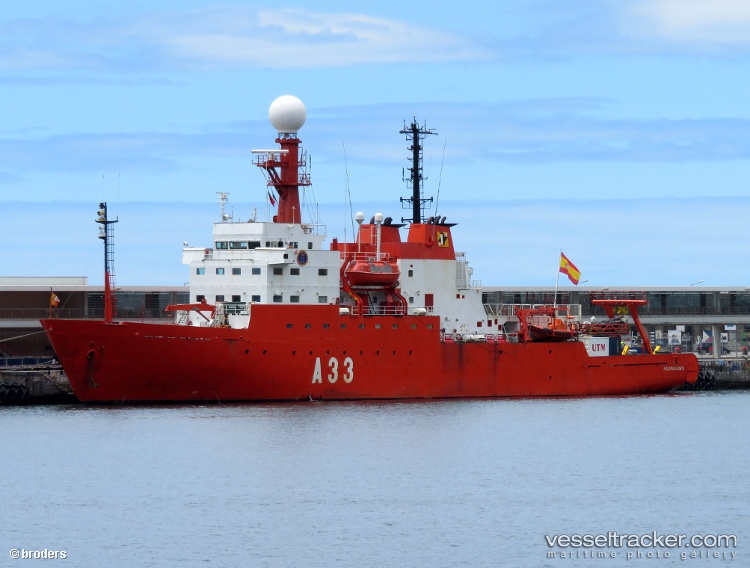
Hesperides
IMO: 8803563
Research Vessel, Spain
Photos
Vessel Details
MMSI
224886000
Callsign
EBBW
Width
15.0 m
Length
82.0 m
Reviews (1)
Logan
2024-03-28
Position: Medical Officer
Advantages:
Looking for information about this vessel. Does anyone have experience with this vessel? How was the atmosphere onboard?
Disadvantages:
No personal experience yet, just gathering info.
Latest News (3)
HESPERIDES 8803563
The "Hesperides" which is expected at Auckland on Apr 13, 2011, is halfway through a circumnavigation of the globe, in which its experts are assessing the effects of climate change on the world's oceans. The Malaspina Expedition will stop in Auckland for three days, and several of its researchers will present findings at the University of Auckland. The $23 million, seven-month expedition did not initially plan to monitor radioactive runoff. Because the nuclear plant in northern Japan was releasing contaminated water into the ocean, it made sense to check the levels of nuclear material in the Pacific. No one was monitoring the spread of radioisotypes, such as cesium-137, because it was logistically difficult to get research vessels to remote spots quickly. When the "Hesperides" leaves Auckland, it will begin testing the waters on the way to Honolulu.
A-33 HESPERIDES 8803563
The "Hesperides" which is expected at Auckland on Apr 13, 2011, is halfway through a circumnavigation of the globe, in which its experts are assessing the effects of climate change on the world's oceans. The Malaspina Expedition will stop in Auckland for three days, and several of its researchers will present findings at the University of Auckland. The $23 million, seven-month expedition did not initially plan to monitor radioactive runoff. Because the nuclear plant in northern Japan was releasing contaminated water into the ocean, it made sense to check the levels of nuclear material in the Pacific. No one was monitoring the spread of radioisotypes, such as cesium-137, because it was logistically difficult to get research vessels to remote spots quickly. When the "Hesperides" leaves Auckland, it will begin testing the waters on the way to Honolulu.
ESPNAVY A33 8803563
The "Hesperides" which is expected at Auckland on Apr 13, 2011, is halfway through a circumnavigation of the globe, in which its experts are assessing the effects of climate change on the world's oceans. The Malaspina Expedition will stop in Auckland for three days, and several of its researchers will present findings at the University of Auckland. The $23 million, seven-month expedition did not initially plan to monitor radioactive runoff. Because the nuclear plant in northern Japan was releasing contaminated water into the ocean, it made sense to check the levels of nuclear material in the Pacific. No one was monitoring the spread of radioisotypes, such as cesium-137, because it was logistically difficult to get research vessels to remote spots quickly. When the "Hesperides" leaves Auckland, it will begin testing the waters on the way to Honolulu.
Frequently Asked Questions
🌊 Did Hesperides sink or have any sinking incidents?
Based on available news reports, Hesperides has been mentioned in connection with sinking-related incidents. There have been 3 news reports mentioning sinking incidents. For detailed information about specific incidents, please refer to the latest news section above.