Gunde-Maersk
IMO: 9359014
Container Ship, Hong Kong
Photos
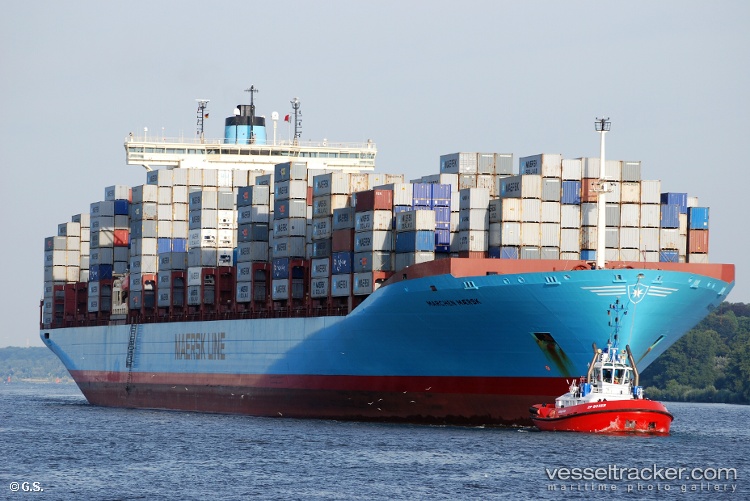
Vessel Details
MMSI
477893700
Callsign
VRVO9
Width
42.0 m
Length
367.0 m
Reviews (1)
Eric
2024-11-24
Position: Deck Cadet
Advantages:
Looking for information about this vessel. Curious if anyone's sailed on this vessel? Would sail again?
Disadvantages:
No personal experience yet, just gathering info.
Latest News (1)
O-ring replacement eyed in engine room fire
The National Transportation Safety Board stated in its report published on Nov 3, 2016, that an improperly installed fitting on a fuel line supplying an auxiliary engine fuel injector pump esd the probable cause of a fire aboard the "Gudne Maersk" that broke out a few days after the ship switched fuels on entering the North American ECA. The fire broke out Dec 8, 2015, at 05.09 a.m. in auxiliary engine room no. 1 shortly after the vessel departed Terminal 46 in Seattle, Washington. It was quickly extinguished by the vessel's high pressure water mist system, but, as a result of the fire damage, the vessel lost propulsion and required tugboats to return to its berth. There was no environmental damage and none of the 23 crew members were injured. Damage was estimated at $380,000. On November 25, 2015, the ship had switched from using heavy fuel oil to ultra low sulfur marine gas oil. Soon after the fuel switch, the vessel's auxiliary engines―three 4,667-horsepower eight-cylinder Caterpillar engines, each directly coupled to a ship's electrical generator―began leaking fuel. The NTSB noted that due to various differences in the properties of fuels, leaks and other mechanical impacts are common after a fuel changeover, adding that Coast Guard Safety Alert 2-15 notes "several reported incidents involving substantial machinery space fuel leakages while vessels were switching fuel." To repair the leaks on the auxiliary engines, the crew of the Gunde Maersk replaced O-rings throughout each engine's fuel system, with the third engineer and a motorman assigned to complete the work. The third engineer was fully qualified and had previously performed the task. He and the motorman conducted a safety job analysis, and the company's permit to work process was carried out prior to starting the job. The crewmembers replaced the O-rings in the fuel supply piping rail for auxiliary engine no. 3 on November 26, auxiliary engine no. 2 on December 1, and auxiliary engine no. 1 on December 2. Each fitting requiring a replacement O-ring was secured in place with four bolts. After completing the work, the crew tested the installation for 10 minutes, running the engine at idle speed. Fuel flow at idle speed, however, was less than normal operating flow. At the time that the fire broke out on auxiliary engine no. 1, it had run a total of 3 hours since the installation of the new O-rings. NTSB investigators determined that the fire was caused by fuel leaking from a dislodged 1.5-inch-diameter O-ring in the fuel supply line to the no. 3 cylinder fuel injection pump, located near the top of auxiliary engine no. 1. Fuel in the supply line, pressurized to 87 pounds per square inch (psi), sprayed out around the O-ring. Some of the spray struck shields designed to prevent atomized fuel from spraying the engine room, while the remainder of the spray entered the exhaust side of the engine through the space between the cylinder heads. The fuel that struck the spray shields dripped into a fuel drain channel that ran the length of the engine under the fuel supply pipe. The fuel then drained into the 5-liter-capacity overflow tank until the tank was filled, sounding the tank overflow alarm. The source of ignition was most likely fuel spraying and flowing onto the exhaust side of the engine between the cylinder covers. The exact time the leak began could not be determined, but it continued for a long-enough period to fill the overflow tank before the fire started. The fuel overflow tank alarm activated 13 seconds before the fire alarm sounded. The exact point of ignition also could not be determined, but the NTSB says that the exhaust piping was the most likely location. Investigators found that the bolts and fitting where the leak occurred were in good condition. The NTSB performed a microscopic examination of the O-ring, and no damage or imperfections were found. The NTSB says it is likely that the leak occurred because the fitting was not tightened with a torque wrench as prescribed in the manufacturer's written procedures. It notes that "a root cause report issued by the operating company after the accident noted that procedures to replace O-rings on auxiliary engines did not include a post-repair testing procedure. Had the fuel system been tested using a standard procedure under normal operating conditions, it is possible that the leak would have been found before the fire started." The NTSB says it continues to see fires and other accidents caused by failure to adhere to standardized procedures during the maintenance, repair, and testing of equipment. Standardized procedures, which include the use of proper tools, ensure system integrity and the safe operation of equipment within designed specifications. This simple guidance bears repeating, because the consequences of failure―$380,000 in damage to the GUNDE MAERSK alone―can be significant. Post-repair and maintenance operational testing of equipment should be standardized and, where possible, conducted at normal operational pressures and loads to verify the quality and reliability of the maintenance conducted. Full report: http://www.ntsb.gov/investigations/AccidentReports/Reports/MAB1624.pdf
Frequently Asked Questions
🔥 Were there any fires on Gunde-Maersk?
Based on available news reports, Gunde-Maersk has been mentioned in connection with fire-related incidents. There have been 1 news reports mentioning fire incidents. For detailed information about specific incidents, please refer to the latest news section above.
🌊 Did Gunde-Maersk sink or have any sinking incidents?
Based on available news reports, Gunde-Maersk has been mentioned in connection with sinking-related incidents. There have been 1 news reports mentioning sinking incidents. For detailed information about specific incidents, please refer to the latest news section above.
🤕 Were there any injuries or accidents on Gunde-Maersk?
Based on available news reports, Gunde-Maersk has been mentioned in connection with injury-related incidents. There have been 1 news reports mentioning injury incidents. For detailed information about specific incidents, please refer to the latest news section above.
🛠️ Did Gunde-Maersk experience any breakdowns or mechanical failures?
Based on available news reports, Gunde-Maersk has been mentioned in connection with breakdown-related incidents. There have been 1 news reports mentioning breakdowns. For detailed information about specific incidents, please refer to the latest news section above.
⚙️ Did Gunde-Maersk have any engine problems?
Based on available news reports, Gunde-Maersk has been mentioned in connection with engine-related incidents. There have been 1 news reports mentioning engine problems. For detailed information about specific incidents, please refer to the latest news section above.
💥 Was Gunde-Maersk involved in any collisions?
Based on available news reports, Gunde-Maersk has been mentioned in connection with collision-related incidents. There have been 1 news reports mentioning collisions. For detailed information about specific incidents, please refer to the latest news section above.
🛢️ Did Gunde-Maersk have any oil spills or pollution incidents?
Based on available news reports, Gunde-Maersk has been mentioned in connection with spill-related incidents. There have been 1 news reports mentioning spills. For detailed information about specific incidents, please refer to the latest news section above.