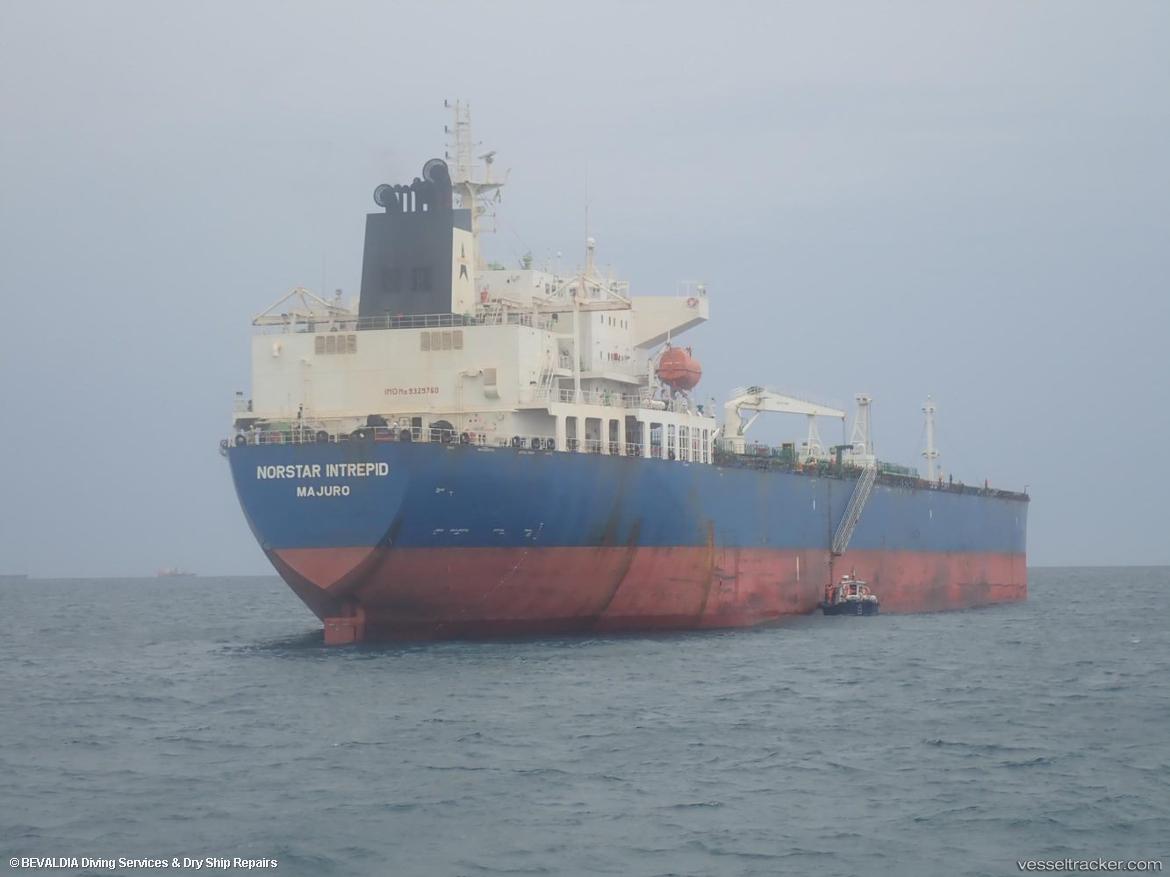
Eagle-S
IMO: 9329760
Crude Oil Tanker, Cook Islands
Photos
Vessel Details
MMSI
518998865
Callsign
E5U4845
Width
33.0 m
Length
229.0 m
Reviews (1)
Jacob
2024-11-12
Position: Bosun
Advantages:
Looking for information about this vessel. Curious if anyone's sailed on this vessel? Would sail again?
Disadvantages:
No personal experience yet, just gathering info.
Latest News (14)
Russian shadow tanker involved in suspected sabotage ended on Aliaga beach
The 'Eagler S' left its long time anchorage of Port Said on Oct 25 and was beached in Aliaga on Nov 12, one day after arriving off the beach, and thus ending a long story of accidents and suspected espionage and sabotage. On May 2, 2012, the tanker, then named 'FR8 Pride' and operated by the Singapore-based company FR8, collided with the floating drilling rig 'Rowan EXL I' in Aransas Pass, the waterway connecting the Gulf of Mexico and Aransas Bay, Texas, after the tanker's engine failed. The NTSB estimated the resulting damage at US$16–17 million. On Sep 25, 2014, the tanker, then named 'LR Mimosa' and chartered by Panamax International Shipping Corporation, destroyed the connection to a monobuoy terminal in Quintero Bay, Chile, causing an oil spill. An estimated 39 tons of crude oil leaked into Quintero Bay. In summer 2024, documents were secured, indicating the presence of signals intelligence equipment on board were Its high power consumption would have overloaded the ship's generators. There were also reports of other suspicious items on board and the disposal of such items into the sea during a previous transit of the English Channel. On Dec 25, 2024, the tanker, now operating as 'Eagle S', crossed the Estlink 2 submarine cable in the Gulf of Finland. At the same time, the company Fingrid reported a power outage on the cable. The Finnish Coast Guard subsequently intercepted the tanker, which was missing its port side anchor, escorted it into Finnish territorial waters, and boarded it. On Dec 28, 2024, the Finnish police moved the vessel from the Gulf of Finland to Svartbäckfjärden Bay near the port of Sköldvik to facilitate further investigations by the police department of the Ministry of the Interior. The crew consisted of 24 people from Georgia and India.[ Eight of them were investigated for criminal offenses such as serious sabotage. During the investigation, a drag mark was discovered on the seabed along the tanker's previous course, which could have been caused by an anchor dragged across the seabed. In early January, the severed anchor was also found and recovered at the end of the drag mark on the seabed. When investigators reviewed the ship's register, they discovered that the vessel's last valid insurance policy with the Russian company Ingosstrakh had expired in August 2024.[ At the time of the incident, the ship was therefore uninsured. During a port state control on board the tanker, 32 deficiencies were identified regarding its technical condition, according to the Finnish Transport and Communications Authority (Traficom). Inspectors found serious deficiencies in fire protection, navigation equipment, and the ventilation of a pump room. Addressing these issues was a prerequisite for the 'Eagle S' to be returned to service. On March 2, 2025, it was announced that the Finnish authorities had released the 'Eagle S'. The Finnish police stated that the technical investigations on the vessel had been completed. Of the eight crew members, five were permitted to leave Finland, while three were required to remain. The captain and two officers, now on trial in Helsinki, claimed that it was not sabotage, but a combination of mechanical defects, inadequate maintenance, and bad weather that caused the 'Eagle S' to drag its anchor. Finnish prosecutors alleged that the tanker deliberately dragged its anchor for 50 nautical miles, damaging five submarine cables. The prosecution is seeking a two-and-a-half-year prison sentence for the three individuals for this offense and negligence. The European Union believes that the 'Eagle S' was part of the shadow fleet, which Russia uses to circumvent the oil embargo that came into effect on December 5, 2022, as well as the price cap on Russian-origin oil products that came into effect on Feb 5, 2023. Photo: https://www.facebook.com/photo/?fbid=10162216294055036&set=g.6884293942
beached
Beached at Aliaga 12.11.25 https://www.facebook.com/photo/?fbid=10162216294055036&set=gm.10165726531838943&idorvanity=6884293942
Acquittal of crew critizised
After the Helsinki District Court acquitted the crew of the 'Eagle S' of charges of gross sabotage of underwater pipelines in the Gulf of Finland, citing international maritime law, more and more maritime law experts are criticizing the acquittal. The District Court was probably not as knowledgeable about this case as it should have been, according to Peter Wetterstein, who has been a professor of private law at Åbo Akademi University, with maritime tort liability and shipowners' environmental liability as his area of expertise. He believes that Finland should be able to intervene against foreign ships if there is a reasonable suspicion of pipe and cable sabotage as in the case of the 'Eagle S', which left Ust-Luga and dragged one of its anchors for six hours, 90 kilometers. The ship was suspected of intentionally severing electrical and data cables on the seabed between Finland and Estonia, and in August, the trial against the three officers from the tanker began, but the Helsinki District Court considered that, while meeting the criteria for serious interference with data communications and serious damage, that Finland lacks criminal jurisdiction because the damage was caused on board a foreign ship in Finland's economic zone. The court referred to the 1982 UN Convention on the Law of the Sea (UNCLOS), where Article 97 gives the flag state – not the coastal state – jurisdiction over navigation incidents on the high seas, including exclusive economic zones. According to Peter Wetterstein, in accordance with international law, Finland has jurisdiction in the exclusive economic zone with regard to the construction and use of artificial islands, installations and other structures. A literal interpretation means interpreting the convention as it is written. A dynamic interpretation means that the convention is interpreted based on society's current conditions, norms, values, and new technologies. Wetterstein believes that the Convention on the Law of the Sea needs a dynamic interpretation, where "artificial islands, installations and other structures" would also include gas pipes and cables. - The coastal state has a strong interest in undisturbed operations with laid underwater pipes and cables in its economic zone. In addition to the economic interests, the electricity supply, data communication and more generally the coastal state's protection needs and risk preparedness can also be mentioned. New cyber threats in the form of sabotage and other damage should be taken into account in this regard.
Navigation lecturer calls for new rules after ruling of District Court
Magnus Winberg, captain, an expert in the shipping industry and lecturer in navigation, calls for new rules to stop the advance of the shadow fleet after the verdict was delivered regarding the 'Eagle S' on Oct 3, in which the Helsinki District Court had ruled that Finland did not have the authority to judge in the case. Though Winberg had suspected there was a risk of that outcome, he hoped that the case will be taken up again by the Court of Appeal and the Supreme Court, as clarity and case law are needed on how to handle similar cases. The tanker crew was suspected of deliberately letting the ship's anchor drag along the seabed, which led to the breaking of several submarine cables. Winberg stated that if the 'Eagle S's anchor dragging was not about sabotage, then it was a matter of incompetence, indicating gross incompetence, ignorance and lack of good seamanship to operate a ship with such major deficiencies. The District Court nevertheless considered that the court lacked jurisdiction, since the incident occurred outside Finnish territorial waters. The rules for how to behave at sea are clear, but circumstances have changed. Ehat happens in international waters is handled by the flag state, and in national waters by the port state. But the Russian shadow fleet has stood outside all existing systems. On the morning of Oct 9, the Attorney General announced his dissatisfaction with the district court's ruling. The Russian shadow fleet consists of vessels such as the 'Eagle S', which transport Russian oil. Either the vessels lack a flag state altogether, or it may happen that the flag state did not take its responsibility when it comes to checking the condition of the vessels. Magnus Winberg believes that new regulations are needed. It is the International Maritime Organization (IMO) and the UN that can influence the regulations in international waters. Winberg also believes that the reputation of the entire shipping industry could take a hit considering how the shadow fleet behaves.
Court rejected indicment
On Oct 3, a Finnish court has rejected the indictment against the captain and two officers of the 'Eagle S', who were accused of damaging underwater infrastructure in the Gulf of Finland in December 2024. The crew will not face trial for damaging a power cable between Finland and Estonia. According to the prosecution, the ship had dragged its anchor 90 km across the seabed, thereby damaging the Estlink 2 power cable between Finland and Estonia as well as four data cables. The crew denied guilt and explained that the anchor had dropped due to technical errors. The court ruled that the damage occurred in international waters and that Finnish criminal law could therefore not be applied. This also meant that the compensation claims of millions of euros were dropped. The case was one of several incidents of damage to cables and pipelines in the Baltic Sea since Russia's invasion of Ukraine, which has prompted NATO to increase surveillance of the region's critical infrastructure as a defense against the hybrid war being waged against Denmark and Europe by Russia.
Final statements at court
Prosecutors and defense lawyers made their final statements on Sep 12 at the Helsinki District Court in the trial of the captain and two officers from the 'Eagle S' on charges that their negligence caused the damage on Dec 25, 2024, of five subsea cables running between Finland and Estonia. After broad speculation that it was a case of sabotage, the prosecution centered on the command responsibilities, citing negligence and not pursuing charges of intentional damage to the cables. The captain, 1st, and 2nd officers of the tanker were charged with aggravated sabotage and aggravated interference with telecommunications as a result of the anchor-dragging incident. The trial began on Aug 25, and the court has now been scheduled to issue its ruling on Oct 3. The three officers have been subjected to a travel ban since Jan 2025 that did not permit them to leave Finland. Others from the crew that had initially been under investigation were removed from the travel ban. The court has now ruled to lift the travel ban on the captain and two officers. Prosecutors had argued it should remain in place until the verdict. The case centered on whether the captain and officers should have realized that the anchor dropped and was being dragged. Investigators concluded it dropped because of poor maintenance and a broken safety pin on the chain stopper. The defense lawyers countered that the anchor windless had been serviced and tested, and further, it had withstood violent storms before the ship entered the Gulf of Finland. The prosecution contended that they should have realized there was a problem because the vessel’s speed dropped when the anchor began dragging. The defense was that they believed it was an engine problem that caused the speed drop. In their closing remarks, the prosecution contended to the court that no evidence was presented of engine problems. According to them, the captain is responsible for the management and condition of the ship while the two officers were on navigation watch during the time the anchor dragged 55 miles along the seabed. The defense said it was the chief engineer, who was not on trial, who was responsible for the condition of the machinery, including the anchor. Further, they questioned why the Finnish authorities had not informed the vessel sooner when they suspected it was dragging the anchor. There also remained an issue of jurisdiction, and whether the vessel voluntarily entered Finnish waters. The defense argued that Finland lacked the authority because the damage occurred in international waters and the ship only entered Finnish waters when it was commanded by the police. The prosecutors were still asking the court to sentence each of the three officers to a minimum of 2,5 years in prison. The leniency of the proposed sentences is because the cables were not intentionally broken and the overall damage was “quite minor.” The companies reported it took a few months to complete repairs at a cost of approximately €55 million. The incident was followed by several other suspicious events, which led to allegations that it was part of an orchestrated plot by Russia. NATO and the Scandinavian countries increased monitoring of key assets as a result of the suspicions regarding the actions of the 'Eagle S'.
Shipping company instructed captain to destroy evidence
Captain Davit Vadatchkoria of the Russia-linked 'Eagle S' was instructed by his shipping company to destroy evidence after the ship was seized by Finnish authorities. The instruction to conceal evidence is among a range of investigative material publicized by the Finnish Central Criminal Police (KRP) as part of the prosecution in the Helsinki Criminal Court. The captain and two senior officers were charged with aggravated criminal mischief and aggravated interference with communications. The transcript of a wiretap released as part of the prosecution of the three men revealed that just days after the ship was detained, the captain was warned by the shipping company’s technical department to hide a list of subsea infrastructure that the ship had crossed over: “So don't share this list with anyone, please. Destroy it. Because they will come back and demand compensation from you for all the damages,” The captain verbally agreed to destroy the list. Other material made public by Finnish police included the revelation that the VDR of the 'Eagle S' was not functioning at the moment the ship severed the Estlink 2 power cable,. After police ruled out intentional manipulation, the malfunction was attributed to the older vessel’s systems being dependent on receiving a GPS signal, something the ship could not find due to Russian GPS interference in the region. The prosecutors argued that the senior crew members were recklessly negligent while the defendants contend that the incident was an unfortunate but typical maritime accident. They were also challenging Finland’s jurisdiction.
VDR was not working during critical period of cable damage
The voyage data recorder (VDR), of the 'Eagle S' was not functioning during the critical period in which the vessel damaged several undersea cables in the Gulf of Finland. According to materials from the National Bureau of Investigation (KRP), made public as part of an ongoing criminal trial, the data recorder failed to capture the moment when the vessel's anchor severed the Estlink 2 electricity cable on Dec 25, 2024. The investigators found that the VDR had only begun recording data at 12:59 that day. By that time, the tanker had already entered Finland’s exclusive economic zone at 12:23 and crossed over Estlink 2, where the cable was damaged. KRP officials seized the VDR and conducted technical examinations, including efforts to recover overwritten or deleted data. No usable recordings were found between Dec 18 and 12:59 on Dec 25, a period during which the vessel had mostly remained in Russian territorial waters. The investigators considered both equipment failure and intentional interference. The KRP found no signs of tampering. A technical explanation emerged during forensic analysis: the VDR system relied on a GPS time signal, which had been lost intermittently during the voyage. According to police findings, the GPS receiver onboard had reverted to an incorrect time, sometimes displaying the year 2005, when it failed to acquire a satellite signal. As a result, the recorder deleted existing files to manage disk space. Investigators described the GPS unit as outdated, dating back to the early 2000s. The captain Davit Vadatchkoria told investigators that the ship had lost its GPS signal approximately an hour after entering Russian waters. Signal reception remained unstable until it resumed at 12:59 onAug 25. At that point, the VDR resumed normal recording, including bridge communications. At 1:05 p.m., just minutes after the system reactivated, the ship’s second mate informed the captain of low engine revolutions. The fifth and final cable break occurred later that evening at 6:43 p.m. The 'Eagle S' had been first anchoring in St Petersburg on Dec 21, and departid from Ust-Luga with a fuel cargo on Dec 24.
Doubts that defendants did not notice that the anchor was dragging on the seabed
In the trial against the master of the 'Eagle S', Captain Stig Sundberg, chairman of the Helsinki Shipmasters' Association, doubted that the defendants did not notice that the anchor was dragging on the seabed. He believes that an anchor dragging on the seabed makes so much noise that it is difficult not to register it. According to Sundberg it is very strange that none of the crew noticed that the anchor had been dragged along the seabed for almost a hundred kilometers. According to Sundberg, the anchor falling on the port side would also have caused the ship to pull to one side.The ship's captain Davit Vadatchkoria and two of the mates face two and a half years in prison on suspicion of cutting five submarine cables in the Gulf of Finland. The captain denies all charges, and his defense attorney Tommi Heinonen believes that natural forces caused the anchor to fall into the sea. The defense explained that the anchor may have come loose without anyone on the crew being involved by the fact that the anchor windlass was worn out. The prosecutors believe that the three defendants knew about the deficiencies, and assessed that the captain is the one responsible for ensuring that the anchor should have been in a seaworthy condition. It is highly unusual for a person in charge not to conduct a thorough examination of the condition of the ship before setting out on the water. The trial regarding the 'Eagle S' continues on Aug 27.
Captain Vadatchkoria declares himself innocent
The Georgian captain Davit Vadatchkoria of the 'Eagle S' for the first time he has given his version of events on board the tanker after Estlink 2, an important power cable between Finland and Estonia, had stopped working. When the ship was boarded, Davit Vadachkoria says he did not know about the cable breaks. Earlier in the evening, the Border Guard vessel 'Turva' had approached the 'Eagle S' outside Porkala, made contact and reported that the anchor chain was out. Vadatchkoria then decided to stop his vessel and haul up the anchor. Then he noticed that it was gone, describing it as one of the worst things he had experienced during his career as a tanker captain. He asked the commander of the 'Turva' for permission to continue the route westward, towards the Danish Strait and on to Egypt, which was the destination for the unleaded gasoline and diesel oil in the cargo. According to Davit Vadatchkoria, the 'Turva's commander refused to budge, who wanted to continue talking and repeated that the 'Eagle S' should steer into Finnish waters to anchor. Vadatchkoria knew that he was in international waters, and that Finnish authorities only had limited rights to command merchant ships out there. He chose to follow the order anyway. At the new anchorage, he had expected port authorities and insurance representatives to board the 'Eagle S' calmly and safely with the help of the 'Turva's inflatable boats. Instead he received orders to gather the entire crew except for the three highest officers in the mess. Then the tanker was boarded with helicopters, and the boarding team confiscated electronic equipment such as computers, cameras and phones.According to the captain, they had spent two nights sleeping on the floor of the mess. During that time, each crew member was questioned. After that, one crew member needed psychological support, and another was taken to hospital for treatment of a blood clot. A few days later, the ship was ordered into Sköldvik outside Porvoo to undergo a port state inspection. After initially refusing, Davit Vadatchkoria claimed that he was forced to comply with the authorities' demands at gunpoint, otherwise he would have been arrested, and then he would have completely lost control of the ship and the crew. By this point, it was clear that the 'Eagle S' was singled out as the ship that had not only severed an electrical cable but also four communication cables, and a total of eight people on board were suspected of crimes. Suspicions remain against three officers, Captain Davit Vadatchkoria and the first and second mates. Indictments have been brought and the trial will begin in the Helsinki District Court on Aug 25. The three are suspected of aggravated sabotage and aggravated disruption of postal and telecommunications traffic. The indictment contains alternative crime categories that are milder, such as aggravated damage and causing public danger. Jukka Rappe, Deputy Prosecutor General, believes that the actions were intentional. Jukka Rappe brought charges last week and the next step is the trial, which is expected to take a couple of weeks. Jukka Rappe has said that there is not necessarily any conspiracy behind it, which can be interpreted as the fact that no money transfers from the Kremlin have been found and no conversation that proves that the 'Eagle S' had a secret mission to tear up cables in order to destabilize the Nordic countries. Together with his lawyers, Davit Vadatchkoria has gone through the entire preliminary investigation on hundreds of pages. Captain Davit Vadatchkoria believes that it was an accident and that a detailed technical and structural investigation would now be required. He also points out that the severe weather exposed the ship to extra stress. The question whether the crew should have discovered that the anchor had gone out and dragged the ship for 90 kilometers, was answered with yes by prosecutor Jukka Rappe and no by captain Davit Vadatchkoria, who claimed that he could prove that there were no heeling movements or course changes that would have caused an alarm from the autopilot, nor were any increasing vibrations, impacts or bouncing movements noticed that would have indicated that the anchor had been dragged. No abnormal noises from scraping chain or smoke were detected from the anchor windlass. According to Vadatchkoria, there were no visible dents or distortions and no traces of soot, which would usually be the case when the anchor has been lowered uncontrolled. Eagle S lost a couple of knots of speed just before 12.26 on Christmas Day when the electric cable broke. This could be explained by the anchor starting to drag at that time. But according to Davit Vadatchkoria, the change in speed was not something they reacted to. The wind had picked up, the wave height increased and other nearby ships also lost speed. Davit Vadatchkoria and the two other suspects have been held in Finland with a travel ban. They have been living in Helsinki since. Report with photos: https://yle.fi/a/7-10082866
Charges brought against captain and two officers
The Deputy Prosecutor General of Finland confirmed on Aug 11 that charges have been brought against the captain and the first and second officers of the 'Eagle S', related to the damage to five undersea cables on Dec 25, 2024. The captain, a Georgian national, along with the two officers of Indian nationality, were charged with aggravated criminal mischief and aggravated interference with communications. The charges also included alternative indictments. Further details could be released by the District Court when the hearings begin. The investigation showed that the tanker departed the Ust-Luga terminal with a cargo of oil products. On Dec 25, they believed the vessel dragged its anchor on the seabed for about 90 kilometres, damaging the five cables. The prosecutors report in addition to the critical interruption of services, the companies incurred costs of at least €60 million for the repairs. The defendants have denied that they committed the offences for which they are being charged. Further, they have also questioned Finland’s jurisdiction. They contended the country lacks the right to bring the charges as the damage happened in international waters. The three individuals have been detained in Finland since the incident occurred. Finnish authorities originally has detained nine individuals, instructing them not to leave Finland, but later focused on the three top officers from the tanker. The Helsinki District Court will set a date for the hearing of the case. If necessary, it will also resolve the issue of Finnish jurisdiction.
Officers could be charged by end of August
Three officers of the 'Eagle S', who have been detained in Finland since Christmas Day after their ship severed multiple subsea cables in the Baltic Sea, could be charged with criminal offenses within the next two months, according to Jukka Rappe, Finland’s deputy prosecutor general, who said that the prosecutors expected to make their decision over whether to bring charges against the men by August at the latestt. The NBI announced on June 13 that its criminal investigation had been completed and had upheld the suspicions of aggravated criminal mischief and aggravated interference with telecommunications. The suspects, who were believed to be Georgian nationals, were the three most senior officers on board the Russia-linked oil tanker. The ship was seized by Finnish authorities after dragging its anchor along the seafloor for almost 62 miles, amid concerns over Russian sabotage and subversion activities in Europe. The rest of the crew and the ship were freed to depart in March. According to Finland’s Criminal Code, which does not contain a specific offense for sabotage, aggravated criminal mischief carries a minimum prison sentence of two years and a maximum of 10, while the sentence for aggravated interference with telecommunications ranges between four months and five years. The decision to formally charge the three men rests with prosecutors. Pre-trial investigation of the 'Eagle S case has been completed, and the case transferred to the Office of the Prosecutor General for consideration of charges. The Eagle S had also been investigated by Traficom, the Finnish transport and communications agency, which dentified deficiencies aboard, both in terms of its crew accommodation and the general maintenance of the ship, particularly in regards to fire safety, navigation equipment and pump room ventilation.
Repairs of submarine cable completed
The repairs to the Estlink 2 electricity transmission cable between Finland and Estonia have been completed. The submarine cable can be put back into service on June 20. The connection has been out of service since December 2024, and the work to repair the cable has been ongoing at sea since mid-May. During the repair, approximately one kilometer of the damaged submarine cable was replaced with a new one.Tests to restart the cable began on the evening of June 17 and have continued without problems. The cable will be put into commercial operation as soon as the test period has been successfully completed. Despite Estlink 2 being out of service since Christmas Day, electricity transmission between Finland and Estonia has been working. However, capacity has temporarily decreased by 650 megawatts. The 'Eagle S' is suspected of causing the damage. The Finnish Central Criminal Police has investigated the case. Among other things, three people on the crew were suspected of crimes. The tanker belongs to the Russian shadow fleet.
Finland accuses crew of Russian linked tanker of damaging undersea cable
The National Bureau of Investigation of Finland (NBI) has completed its criminal investigation into the damage caused to cables in the Gulf of Finland by the 'EAgle S' on Dec 25,. 2024. As stated, based on the investigation, senior officers of the tanker were suspected of aggravated criminal mischief and aggravated interference with telecommunications. The investigation focused on the possible involvement of the tanker, which was present in the area at the time the cables were damaged. As a result of the investigative measures carried out during the criminal investigation, the police support that they have a clear understanding of the sequence of events. Drawing on evidence gathered from the vessel, seabed analysis and crew interviews, senior officers of the 'Eagle S' were suspected of committing aggravated criminal mischief and serious interference with telecommunications. Furthermore, among the suspects are the master, the chief mate and the second mate, who were responsible for the safe passage, navigation and operation of the vessel. The criminal investigation has examined and assessed, among other things, the extent of their responsibility for the condition of the vessel and the degree to which they should have observed the anchor falling into the sea. The investigation involved close cooperation with both national and international authorities to establish the course of events and has been concluded with the case being referred to the Office of the Prosecutor General for consideration of charges. Report with photo: https://safety4sea.com/finland-accuses-vessel-crew-of-damaging-undersea-cable/
Frequently Asked Questions
🔥 Were there any fires on Eagle-S?
Based on available news reports, Eagle-S has been mentioned in connection with fire-related incidents. There have been 3 news reports mentioning fire incidents. For detailed information about specific incidents, please refer to the latest news section above.
🌊 Did Eagle-S sink or have any sinking incidents?
Based on available news reports, Eagle-S has been mentioned in connection with sinking-related incidents. There have been 10 news reports mentioning sinking incidents. For detailed information about specific incidents, please refer to the latest news section above.
🤕 Were there any injuries or accidents on Eagle-S?
Based on available news reports, Eagle-S has been mentioned in connection with injury-related incidents. There have been 3 news reports mentioning injury incidents. For detailed information about specific incidents, please refer to the latest news section above.
🚫 Are there any sanctions against Eagle-S?
Based on available news reports, Eagle-S has been mentioned in connection with sanction-related incidents. There have been 1 news reports mentioning sanctions. For detailed information about specific incidents, please refer to the latest news section above.
🛠️ Did Eagle-S experience any breakdowns or mechanical failures?
Based on available news reports, Eagle-S has been mentioned in connection with breakdown-related incidents. There have been 3 news reports mentioning breakdowns. For detailed information about specific incidents, please refer to the latest news section above.
🏴☠️ Was Eagle-S involved in any pirate attacks?
Based on available news reports, Eagle-S has been mentioned in connection with pirate-related incidents. There have been 1 news reports mentioning pirate attacks. For detailed information about specific incidents, please refer to the latest news section above.
⚙️ Did Eagle-S have any engine problems?
Based on available news reports, Eagle-S has been mentioned in connection with engine-related incidents. There have been 8 news reports mentioning engine problems. For detailed information about specific incidents, please refer to the latest news section above.
💥 Was Eagle-S involved in any collisions?
Based on available news reports, Eagle-S has been mentioned in connection with collision-related incidents. There have been 4 news reports mentioning collisions. For detailed information about specific incidents, please refer to the latest news section above.
🛢️ Did Eagle-S have any oil spills or pollution incidents?
Based on available news reports, Eagle-S has been mentioned in connection with spill-related incidents. There have been 5 news reports mentioning spills. For detailed information about specific incidents, please refer to the latest news section above.
🚓 Was Eagle-S detained or arrested?
Based on available news reports, Eagle-S has been mentioned in connection with detention-related incidents. There have been 5 news reports mentioning detentions. For detailed information about specific incidents, please refer to the latest news section above.